
Elementary (Lower - 1st - 3rd grade & Upper - 4th - 6th Grade)

Community of Learners
 Elementary classrooms begin the year establishing the ground rules, their own student-generated constitution. Common themes each year include “this is a mistake making place” and “we will respect our classmates, teachers, and our environment,” demonstrating that even students are motivated to create a community where it is safe to take risks. It is through making mistakes, developing mastery, where true learning takes place.
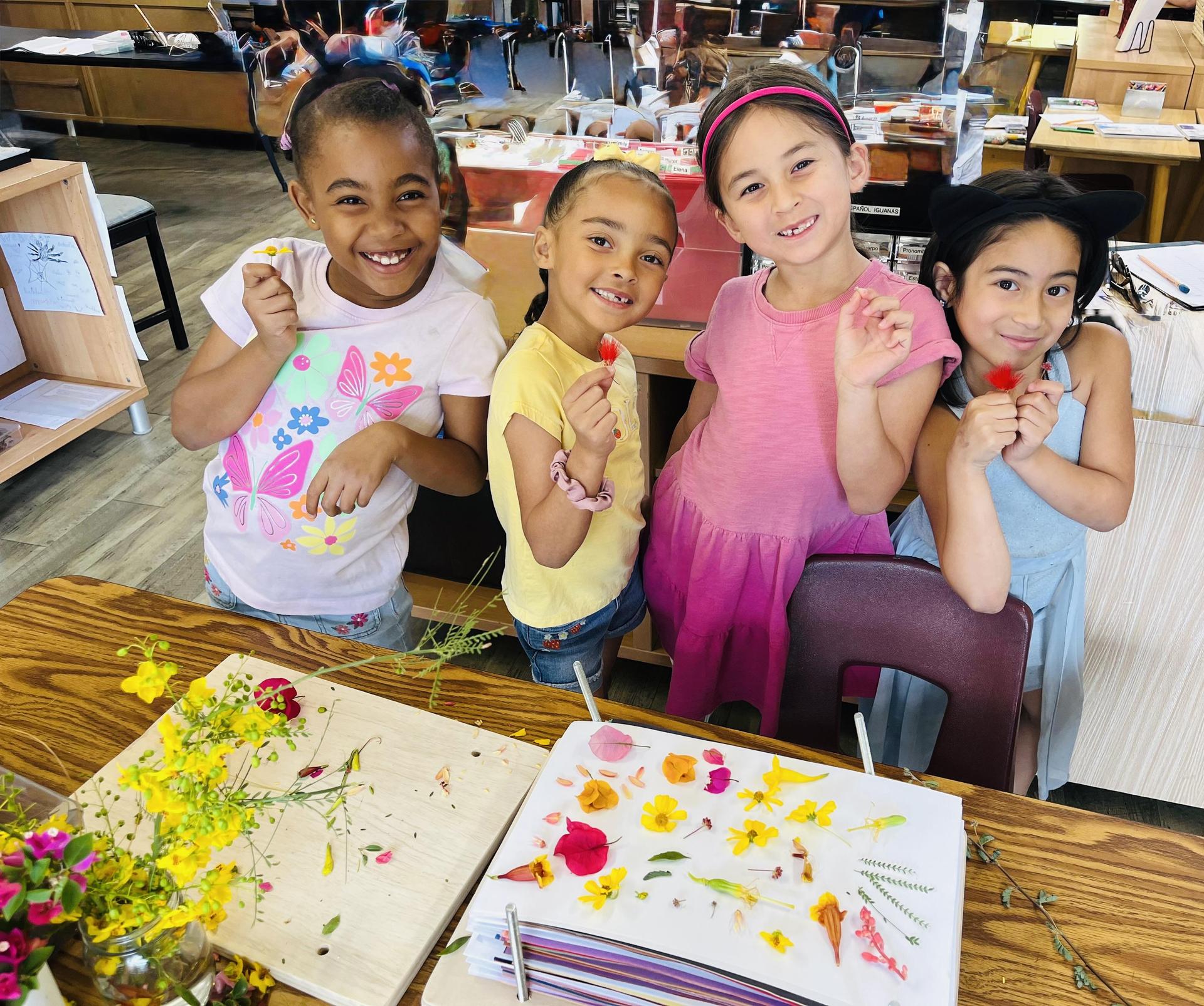
Our classrooms are lively and our students are engaged. Students work collaboratively with partners or in small groups; 6-9 year-olds (Lower Elementary, grades 1-3) and 9-12 year-olds (Upper Elementary, grades 4-6) have a multi-age experience with the benefits of older students acting as leaders and mentors.
Learning Environment
Montessori Curriculum
 The Montessori Elementary curriculum allows students to see and explore connections between concepts they are actively learning. By seeing the whole, children are better able to understand the interdependence of things. They can also better understand their role — how they fit in and what their contributions can be.
At the beginning of every year, students are presented the first of the “Five Great Lessons.” Each is the jumping-off point to key academic areas that must be mastered in the elementary setting. The stories are told with drama, often acted out and supplemented with demonstrations. The essential lessons excite the children and raise more questions than answers. The stories are the catalysts that trigger curiosity and enthusiasm for exciting and important intellectual topics. The result is children who are eager to learn – even topics that might not have personally interested them in earlier studies. The Five Great Lessons vary in detail, complexity and depth for the Upper Elementary and the Lower Elementary presentations.
At each elementary program level there is a comprehensive three-year curriculum. These learning objectives meet or exceed national curriculum guides while allowing students both the structure and the flexibility to attain mastery of concepts. Students benefit from the support of highly-trained teachers with the flexibility to work at their own pace.